Budget 2026 Tech Buying Guide becomes essential reading this February as India's electronics landscape transforms overnight. Finance Minister Nirmala Sitharaman's February 1 announcement slashed customs duties on smartphone components while simultaneously extending ITR filing deadlines—and if you're planning to upgrade your phone this month, these changes directly impact your wallet.
Here's the plot twist nobody saw coming: seven major smartphones are launching in February 2026, right when Budget 2026's duty cuts take effect. Coincidence? Let's break down what this perfect storm means for your next tech purchase.
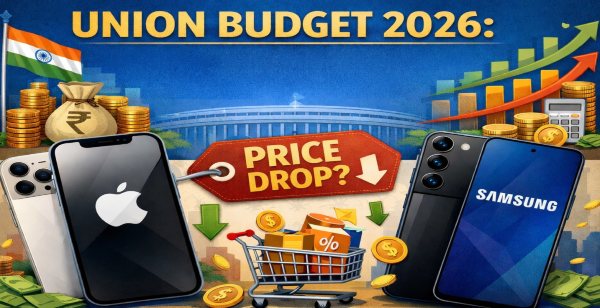
Budget 2026 Tech Buying Guide: The Customs Duty Revolution
The centerpiece of this Budget 2026 Tech Buying Guide starts with component-level duty reductions. Customs duty on personal baggage imports dropped from 20% to 10%, while manufacturing components for smartphones received full exemptions.
Basic Customs Duty exemptions now cover connectors, PCBA (Printed Circuit Board Assemblies), battery covers, and critical display components. Additionally, the ₹40,000 crore allocation for electronics manufacturing under the PLI scheme signals the government's commitment to strengthening domestic production.
But here's the reality check: these measures prioritize lowering input costs for electronics makers rather than delivering immediate price cuts to consumers. Manufacturers can reduce production expenses, but passing those savings to buyers remains entirely discretionary.
What this means for February buyers: locally assembled budget and mid-range phones are projected to become cheaper, while fully imported premium devices may see minimal price changes initially.

The ITR Filing Deadline Extension Nobody Expected
Here's where Budget 2026 Tech Buying Guide gets interesting for salaried professionals planning tech purchases. The ITR filing timeline has been restructured based on form types, affecting how you should plan major expenses.
For salaried individuals filing ITR-1 or ITR-2, the deadline remains July 31, 2026. However, non-audit businesses filing ITR-3 and ITR-4 received extensions to August 31, providing additional breathing room for compliance.
More significantly, the deadline for revised returns extended from December 31 to March 31 with a nominal fee. This matters because it gives you flexibility to correct tax filings if you make a major purchase and need to adjust deductions.
The practical implication? If you're self-employed or run a small business, you now have until August 31 to file, potentially freeing up cash flow for February's smartphone launches.
/pcq/media/media_files/2026/02/02/upcoming-smartphones-in-february-2026_-from-galaxy-s26-to-pixel-10a-2026-02-02-07-57-48.jpg)
February 2026 Smartphone Launches: The Complete Lineup
This Budget 2026 Tech Buying Guide wouldn't be complete without analyzing what's actually launching. February 2026 presents an unprecedented concentration of flagship and mid-range releases.
Samsung Galaxy S26 Series (February 25)
Samsung is set to unveil the Galaxy S26 series on February 25, with the first sale opening on March 11, 2026. The lineup includes Galaxy S26, S26+, and S26 Ultra, with the Ultra model exclusively running Snapdragon 8 Elite Gen 5 while standard models use Exynos 2600 in India.
The timing is strategic. Samsung's February 25 Unpacked falls just 24 days after Budget 2026 announcements, potentially allowing the company to adjust pricing based on component duty reductions. Expect refined cameras, enhanced AI features, and One UI 8.5 based on Android 16.
Budget 2026 Impact: Component duty exemptions on PCBA and battery covers directly reduce manufacturing costs for Galaxy S26 devices assembled in India. If Samsung passes savings forward, expect ₹2,000-₹5,000 reductions on standard S26 models compared to S25 launch pricing.
Apple iPhone 17e (Late February)
Apple could unveil the iPhone 17e in late February, following the iPhone 16e's timeline. Rumored specifications include the A19 chip, 6.1-inch OLED display, and single 48MP rear camera, with pricing expected to remain at $599 (approximately ₹50,000).
Here's what makes the iPhone 17e fascinating in this Budget 2026 Tech Buying Guide: Apple kept the iPhone 17e price unchanged despite climbing DRAM prices that forced Chinese OEMs to raise prices. This price stability creates direct competition with Samsung's mid-range offerings.
Budget 2026 Impact: The 10% reduction in personal baggage duty benefits travelers purchasing iPhones abroad, but domestically sold iPhone 17e units see minimal impact since Apple already manufactures extensively in India.
Google Pixel 10a (Mid-February)
The Pixel 10a represents Google's value proposition for 2026. Expected specifications include the Tensor G4 chip (same as Pixel 9a), 5,100mAh battery, 48MP dual-camera setup, and 120Hz OLED display.
Google's photography-first approach positions the Pixel 10a as the budget camera phone to beat. With Tensor G4 enabling advanced computational photography, the Pixel 10a could deliver flagship-quality photos at mid-range pricing.
Budget 2026 Impact: Google's increased local manufacturing under the PLI scheme means component duty exemptions directly reduce production costs. Expect aggressive pricing around ₹35,000-₹40,000 to challenge Samsung's Galaxy A series.
iQOO 15R & 15 Ultra (February 4 & 24)
iQOO is bringing serious firepower this February. The iQOO 15 Ultra will launch in China on February 4 with a 7,400mAh battery and 200W charging, while the iQOO 15R (rebranded iQOO Z11 Turbo) launches in India on February 24 with Snapdragon 8 Gen 5 and a massive 7,600mAh battery.
The battery capacity arms race is real. While typical flagships pack 5,000mAh batteries, iQOO is pushing boundaries with 7,400-7,600mAh capacities—enabling two-day battery life even with intensive AI feature usage.
Budget 2026 Impact: The extended capital goods exemption on lithium-ion battery manufacturing reduces costs for battery-heavy devices. iQOO's aggressive pricing strategy combined with reduced battery production costs could deliver flagship specs under ₹40,000.
Vivo V70 Series (Mid-February)
Vivo is refreshing its camera-centric V series with V70 and V70 Elite models. Expected features include ZEISS triple 50MP cameras, 6,500mAh batteries, 90W charging, and Snapdragon processors across variants.
Both models are expected to be priced under ₹55,000, placing them in the premium mid-range segment, directly competing with Samsung's Galaxy A57 and OnePlus's mid-tier offerings.
Budget 2026 Impact: ZEISS optics integration requires imported components, but duty exemptions on camera modules and display panels reduce overall production costs. Vivo's focus on “Made in India” assembly benefits from PLI incentives and component duty cuts.
Motorola Edge 70 Fusion (Late February)
Motorola's Edge 70 Fusion brings unprecedented battery capacity to the mid-range segment. Leaked specifications suggest a 6.78-inch 144Hz AMOLED display, Snapdragon 7s Gen 4 processor, triple rear cameras, and a colossal 7,000mAh battery with 68W charging.
The 7,000mAh battery represents the largest in Motorola's history, addressing the primary complaint about smartphones: battery anxiety. Combined with efficient mid-range processors, expect three-day battery life under normal usage.
Budget 2026 Impact: As a Lenovo subsidiary with extensive Indian manufacturing, Motorola benefits significantly from component duty exemptions. The Edge 70 Fusion could launch under ₹25,000, delivering premium features at budget pricing.
Samsung Galaxy A57 & A37 (Early February)
Samsung's mid-range stalwarts arrive earlier than usual this February, potentially featuring Exynos 1680 (A57) and Exynos 1480 (A37) chips, 120Hz Super AMOLED displays, 5,000mAh batteries, and 45W fast charging.
Both phones are expected to run Android 16 with One UI 8.5 out of the box, offering the latest software experience at accessible price points. The triple-camera setups with 50MP primary sensors deliver solid photography capabilities.
Budget 2026 Impact: Samsung's dominant position in Indian manufacturing means maximum benefit from component duty exemptions. Expect the Galaxy A37 starting around ₹18,000 and A57 around ₹28,000—approximately ₹2,000-₹3,000 cheaper than their predecessors at launch.
Budget 2026 Tech Buying Guide: What's Actually Getting Cheaper?
Let's cut through the marketing noise with hard facts. This Budget 2026 Tech Buying Guide identifies three clear categories:
Immediately Cheaper:
- Personal imports (duty reduced from 20% to 10%)
- Travelers purchasing smartphones abroad save ₹5,000-₹15,000 on premium devices
Potentially Cheaper (3-6 months):
- Locally assembled budget and mid-range smartphones (₹15,000-₹40,000 segment)
- Manufacturers may pass component savings to consumers gradually
Likely Unchanged:
- Fully imported premium flagships (iPhone 17 Pro Max, high-end Samsung imports)
- Global supply chain pressures and memory chip shortages offset duty benefits
The uncomfortable truth from industry experts: any actual retail price drop will depend on the pricing decisions of individual brands—none of whom are obligated to pass savings on to consumers.
The Supply Chain Reality Check
Before this Budget 2026 Tech Buying Guide gets too optimistic, let's address the elephant in the room: global supply chain volatility.
Smart TV prices may climb between 3% and 10% because of ongoing global memory chip shortages (DRAM and NAND) and currency swings. High-end laptops face price increases of up to 30% for 2026 models, driven by 25-40% rises in RAM and SSD costs.
Smartphones aren't immune. Modern devices increasingly rely on AI processors, larger RAM capacities, and powerful hardware—all raising component costs. The worldwide memory chip shortage, driven by AI data centers and cloud infrastructure demand, continues affecting consumer electronics.
As one industry analyst noted: “The budget announced disappoints the smartphone industry along with other consumer electronics products makers who haven't got any fiscal intervention expected to help them offset the present volatility in the supply chain affecting pricing predictability”.
The market contraction is now considered inevitable without direct fiscal relief such as reduced GST rates or immediate duty cuts on finished goods.
Budget 2026 Tech Buying Guide: Strategic Purchase Timing
Here's the actionable strategy based on Budget 2026 changes and February launches:
Buy in Early February If:
- You need a phone immediately and current offers are attractive
- You're considering iPhone 17e or Pixel 10a (limited stock expected)
- Exchange offers on your current device are time-sensitive
Wait Until Late February/Early March If:
- You're targeting Galaxy S26 series (launches February 25, sales March 11)
- You want maximum choice across all seven launches
- You expect manufacturers to announce price adjustments post-Budget
Wait 3-6 Months If:
- You're flexible on timing and want maximum Budget 2026 savings
- You're targeting mid-range devices (₹15,000-₹30,000) where duty benefits accumulate
- You can leverage revised ITR filing deadlines for tax planning
Buy Abroad If:
- You're traveling internationally in Q1 2026
- The 10% personal baggage duty reduction makes premium imports viable
- You're targeting devices not manufactured in India (certain Sony, LG models)
The Tax Planning Angle
This Budget 2026 Tech Buying Guide must address the tax implications of major tech purchases.
If you're self-employed or run a business, the August 31 ITR filing extension for ITR-3/ITR-4 creates strategic opportunities. Purchasing business-use smartphones, laptops, or equipment in February allows you to:
- Claim depreciation immediately in FY 2025-26
- Utilize the extended filing deadline to properly document expenses
- Leverage the revised return deadline (now March 31) to correct any errors
For salaried individuals, the July 31 deadline remains unchanged, but the March 31 revised return deadline provides safety nets for filing corrections.
Budget 2026 Tech Buying Guide: The India Semiconductor Mission 2.0 Factor
Looking beyond immediate purchases, Budget 2026's India Semiconductor Mission 2.0 announcement fundamentally transforms India's electronics ecosystem.
The ₹40,000 crore allocation for electronics manufacturing creates the foundation to design and build globally competitive technology in India, with greater control over critical components rather than relying entirely on imported ecosystems.
For consumers, this means:
- Reduced dependence on Chinese component imports
- More resilient supply chains reducing price volatility
- Domestic innovation in semiconductor design
- Long-term price stability for electronics
The impact won't be immediate—building semiconductor fabs takes 3-5 years—but Budget 2026 sets the foundation for India becoming a true electronics manufacturing powerhouse by 2030.
Real-World Price Predictions
Based on Budget 2026 component duty reductions, manufacturing incentives, and February launch information, here are realistic price predictions:
Samsung Galaxy S26:
- Launch price (without Budget benefits): ₹84,999
- Realistic price (with component savings): ₹79,999-₹82,999
- Potential savings: ₹2,000-₹5,000
iPhone 17e:
- Expected price: ₹49,900 (unchanged from iPhone 16e)
- Apple's pricing power and stable production costs keep prices flat
Google Pixel 10a:
- Launch price: ₹37,999-₹42,999
- Aggressive positioning against Samsung mid-range
- Component duty benefits passed to consumers for market share
iQOO 15R:
- Expected price: ₹34,999-₹39,999
- Flagship specs at mid-range pricing
- Direct challenge to OnePlus, Realme flagships
Vivo V70:
- Expected price: ₹38,999-₹44,999
- Camera-focused value proposition
- ZEISS collaboration premium
Motorola Edge 70 Fusion:
- Expected price: ₹22,999-₹27,999
- Battery beast positioning
- Maximum Budget 2026 benefit in mid-range segment
Samsung Galaxy A57:
- Launch price: ₹26,999-₹29,999
- Component savings could enable ₹24,999-₹27,999 pricing
- Strong One UI 8.5 software appeal
Expert Recommendations: Your Budget 2026 Tech Buying Guide Action Plan
After analyzing Budget 2026 tax changes and all seven February smartphone launches, here's the definitive buying strategy:
Best Overall Value: Google Pixel 10a
- Budget 2026 component savings maximize value
- Flagship photography at mid-range pricing
- Clean Android experience with guaranteed updates
Best Flagship: Samsung Galaxy S26 (standard model)
- Component duty benefits most apparent here
- One UI 8.5 brings advanced AI features
- Strong ecosystem integration (Galaxy Watch, Buds)
Best Battery Life: Motorola Edge 70 Fusion or iQOO 15R
- 7,000-7,600mAh batteries deliver multi-day usage
- Budget 2026 benefits reduce battery production costs
- Mid-range pricing with flagship endurance
Best Budget Option: Samsung Galaxy A37
- Maximum Budget 2026 component savings in sub-₹20,000 segment
- One UI 8.5 delivers premium software experience
- Reliable Samsung after-sales service
Best Premium Choice: Samsung Galaxy S26 Ultra
- If budget allows, the Ultra delivers unrestricted flagship experience
- Snapdragon 8 Elite Gen 5 exclusively
- Budget 2026 benefits reduce price premium slightly
The Bottom Line: Timing Is Everything
Budget 2026 Tech Buying Guide concludes with a simple truth: February 2026 represents a unique buying opportunity, but only if you're strategic.
Component duty reductions won't slash prices overnight. Manufacturers will gradually pass savings to consumers over 3-6 months. However, February's concentrated smartphone launches create competitive pressure, potentially accelerating price adjustments.
The ITR filing deadline extensions provide tax planning flexibility, particularly for self-employed individuals who can leverage longer filing windows for major purchases.
Most importantly, the India Semiconductor Mission 2.0 and expanded PLI schemes signal long-term structural changes. India is transitioning from assembly to genuine electronics manufacturing, creating sustained price competitiveness.
Ready to Make Your Move? Here's Your Call to Action
This Budget 2026 Tech Buying Guide has laid out the facts—now it's decision time.
Take Action Today:
1. Identify Your Target Device: Based on this guide, which February launch matches your needs? Galaxy S26 for ecosystem integration? Pixel 10a for photography? iQOO 15R for performance? Drop a comment below with your choice and budget—let's discuss whether it's the right call.
2. Calculate Your Savings: Use the price predictions above to estimate how Budget 2026 component duty reductions affect your target device. Are you buying immediately or waiting 3-6 months for maximum savings? Share your strategy in the comments.
3. Plan Your Tax Filing: If you're filing ITR-3 or ITR-4, how does the August 31 extension affect your tech purchase timing? Can you leverage depreciation benefits? Ask questions below—we'll help you navigate the tax implications.
4. Track Launch Dates: Set reminders for:
- February 4: iQOO 15 Ultra (China)
- February 24: iQOO 15R (India)
- February 25: Samsung Galaxy S26 Unpacked
- Late February: iPhone 17e, Pixel 10a, Vivo V70
5. Join the Discussion: What's your biggest question about Budget 2026's impact on smartphone prices? Are you skeptical manufacturers will pass savings forward? Worried about supply chain issues? Comment below and let's debate.
6. Share This Guide: Know someone planning a smartphone purchase this February? Share this Budget 2026 Tech Buying Guide with friends, family, or your tech enthusiast group. The more informed buyers are, the better purchasing decisions we all make.
7. Stay Updated: Bookmark this guide and check back as February launches happen. We'll update with real-world pricing as manufacturers announce official numbers.
The Future of Tech Buying Starts Now
Budget 2026 didn't just change customs duties—it signaled India's evolution into a genuine electronics manufacturing powerhouse. The seven smartphones launching this February represent the first wave of devices benefiting from these structural changes.
Your next phone purchase isn't just about specs and features anymore. It's about understanding how government policy, global supply chains, and manufacturer strategies intersect to create value.
What will you choose? When will you buy? How will you leverage Budget 2026's changes to maximize value?
Tell us in the comments below. Your insights help build a smarter, more informed tech buying community.
Let's navigate Budget 2026 together and make February 2026 the smartest smartphone upgrade season yet.