NVIDIA RTX 50-Series Brings Game-Changing Performance to Desktop and Mobile Gaming
NVIDIA RTX 50-Series graphics cards powered by the Blackwell architecture launched at CES 2025, marking a revolutionary advancement in gaming and creative computing. The RTX 5090 and RTX 5080 became available on January 30th, with the RTX 5070 Ti and RTX 5070 following in February. This comprehensive guide covers everything you need to know about NVIDIA RTX 50-Series pricing, specifications, availability, and purchasing strategies.
The NVIDIA RTX 50-Series represents the most significant generational leap in GPU technology in recent years. Built on the Blackwell architecture with fifth-generation Tensor Cores and fourth-generation RT Cores, these graphics cards deliver unprecedented AI-powered performance through DLSS 4 with Multi Frame Generation technology.

NVIDIA RTX 50-Series Complete Price List and MSRP
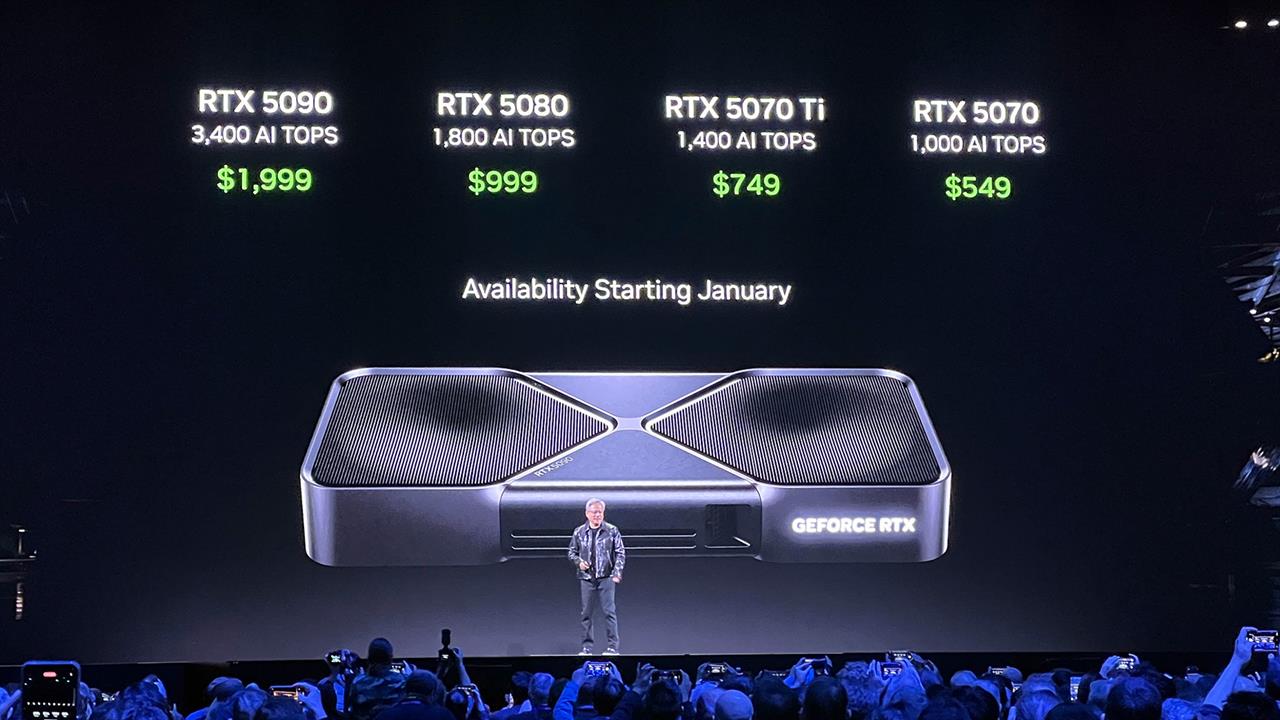
Understanding the pricing structure for NVIDIA RTX 50-Series cards is crucial for making informed purchasing decisions. The GeForce RTX 5090 launched at $1,999 and the RTX 5080 at $999, while the RTX 5070 Ti and RTX 5070 are priced at $749 and $549 respectively:
Desktop Graphics Cards:
- RTX 5090: $1,999 MSRP (Founders Edition)
- RTX 5080: $999 MSRP
- RTX 5070 Ti: $749 MSRP
- RTX 5070: $549 MSRP
- RTX 5060 Ti: Pricing TBA (February 2026)
- RTX 5060: Pricing TBA (February 2026)
Current Market Reality:
However, the RTX 5090 currently sells for around $3,000-$3,500 at major retailers, representing a 50% premium over MSRP. Supply constraints and high demand have pushed AIB partner cards well above manufacturer suggested pricing. The $1,999 MSRP can only be found on NVIDIA's official store for Founders Edition cards through their Verified Priority Access program.
Laptop GPU Pricing:
For mobile variants, laptops with RTX 5090 start around $2,899, RTX 5080 laptops at $2,199, RTX 5070 Ti at $1,599, and RTX 5070 at $1,299. These prices reflect complete laptop systems rather than individual GPU components.
NVIDIA RTX 50-Series Technical Specifications Breakdown
The NVIDIA RTX 50-Series features cutting-edge specifications that enable revolutionary performance gains. The RTX 5090 includes 32GB of GDDR7 memory, 21,760 CUDA Cores, 680 fifth-generation Tensor Cores, and 170 fourth-generation RT Cores:
RTX 5090 Specifications:
- CUDA Cores: 21,760
- Tensor Cores: 680 (5th Gen)
- RT Cores: 170 (4th Gen)
- Memory: 32GB GDDR7
- Memory Bandwidth: 1,792 GB/sec
- AI Performance: 3,352 TOPS
- TDP: 575W
- Architecture: Blackwell (92 billion transistors)
RTX 5080 Specifications:
- CUDA Cores: 10,752
- Memory: 16GB GDDR7
- Memory Bandwidth: 960 GB/sec
- AI Performance: 1,801 TOPS
- TDP: 360W
RTX 5070 Ti Specifications:
- CUDA Cores: 8,960
- Memory: 16GB GDDR7
- AI Performance: 1,406 TOPS
- TDP: 300W
RTX 5070 Specifications:
- CUDA Cores: 6,144
- Memory: 12GB GDDR7
- AI Performance: 988 TOPS
- TDP: 250W
All NVIDIA RTX 50-Series cards feature GDDR7 memory with speeds up to 30Gbps, delivering up to 1.8TB/s of memory bandwidth for the flagship models.
Performance Gains: What Makes NVIDIA RTX 50-Series Revolutionary
The NVIDIA RTX 50-Series delivers unprecedented performance improvements through a combination of architectural enhancements and AI-powered technologies. Thanks to Blackwell architecture innovations and DLSS 4, the RTX 5090 outperforms the RTX 4090 by up to 2X in supported games.
DLSS 4 Multi Frame Generation:
The standout feature of NVIDIA RTX 50-Series cards is DLSS 4 with Multi Frame Generation. This technology can multiply performance with up to 8X frame rate increases compared to traditional rendering, generating up to three additional frames for every traditionally rendered frame. This allows high-end titles like Cyberpunk 2077, Alan Wake 2, and Black Myth: Wukong to run at 4K resolution with full ray tracing at 240 FPS.
AI and Creative Workflows:
For generative AI applications, the RTX 5090 delivers 2X faster image generation using FP4 precision, reducing Black Forest Labs' FLUX.1 model processing from 15 seconds to just over 5 seconds. Content creators benefit from enhanced video encoding capabilities and accelerated 3D rendering workflows.
Ray Tracing and Neural Rendering:
The Blackwell streaming multiprocessor has been updated with more processing throughput and tighter Tensor Core integration to optimize neural shader performance. Fourth-generation RT Cores enable unprecedented levels of geometric complexity in ray-traced scenes, while Shader Execution Reordering runs twice as efficiently compared to previous generations.
NVIDIA RTX 50-Series Laptop GPUs: Mobile Gaming Revolution
The NVIDIA RTX 50-Series extends Blackwell architecture benefits to portable computing with impressive efficiency gains. Pre-orders for RTX 5090, 5080, and 5070 Ti laptops opened on February 25, 2025, from manufacturers including ASUS, GIGABYTE, HP, Lenovo, MSI, and Razer.
Mobile GPU Specifications:
RTX 5090 Laptop GPU:
- CUDA Cores: 10,496
- AI Performance: 1,824 TOPS
- Memory: 24GB GDDR7
- Features: Triple NVENC encoders
RTX 5080 Laptop GPU:
- CUDA Cores: 7,680
- AI Performance: 1,334 TOPS
- Memory: 16GB GDDR7
RTX 5070 Ti Laptop GPU:
- CUDA Cores: 5,888
- AI Performance: 992 TOPS
- Memory: 12GB GDDR7
RTX 5070 Laptop GPU:
- CUDA Cores: 4,608
- AI Performance: 798 TOPS
- Memory: 8GB GDDR7
New Max-Q technologies including Advanced Power Gating, Low Latency Sleep, and Accelerated Frequency Switching increase battery life by up to 40% compared to previous generation laptops.
Buying Guide: How to Purchase NVIDIA RTX 50-Series Graphics Cards
Securing an NVIDIA RTX 50-Series card at MSRP requires strategic planning and persistence. Here's a comprehensive buying strategy:
Official NVIDIA Channels:
- NVIDIA Direct: Sign up for Verified Priority Access on NVIDIA's official website to receive notifications when Founders Edition cards become available.
- Authorized Retailers: Major retailers including Best Buy, Newegg, B&H Photo, and Micro Center receive regular stock allocations.
- AIB Partners: Factory-overclocked variants from ASUS, GIGABYTE, MSI, ZOTAC, PNY, and other partners offer alternative options, though typically at premium pricing.
Timing Your Purchase:
Market conditions for NVIDIA RTX 50-Series cards remain challenging. Current pricing shows the RTX 5090 commanding a 50% premium at approximately $3,000, while the RTX 5080 trades at 32% above MSRP. However, mid-range options like the RTX 5070 and 5060 are now available near MSRP at select retailers.
Price Outlook and Market Conditions:
Industry reports suggest potential price increases throughout 2026 due to memory supply constraints, with the RTX 5090 potentially reaching $5,000 later in the year. Rising GDDR7 memory costs now account for over 80% of GPU manufacturing expenses, creating upward pricing pressure across the industry.
Alternative Strategies:
- Wait for Stock Stabilization: If purchasing flagship models, consider waiting 2-3 months for supply to normalize and prices to approach MSRP.
- Consider Previous Generation: The RTX 3080 Ti at $436 and RTX 3070 at $208 offer excellent value for 1440p gaming if NVIDIA RTX 50-Series pricing remains prohibitive.
- Laptop Options: Mobile NVIDIA RTX 50-Series variants may offer better availability and complete system solutions at competitive pricing.
- Pre-Built Systems: System integrators often secure GPU allocations unavailable to individual consumers, potentially offering better value.
System Requirements and Compatibility for NVIDIA RTX 50-Series
Proper system configuration ensures optimal NVIDIA RTX 50-Series performance. All RTX 50 Series designs must use the 16-pin 12V-2×6 connector, marking a departure from previous generation flexibility.
Power Supply Requirements:
- RTX 5090: 850W minimum (1000W+ recommended)
- RTX 5080: 750W minimum (850W recommended)
- RTX 5070 Ti: 700W minimum (850W recommended)
- RTX 5070: 650W minimum (750W recommended)
These recommendations account for total system power draw including high-end processors. The RTX 5090 requires 575W alone, necessitating robust power delivery infrastructure.
Platform Considerations:
- PCIe 5.0 x16 slot (PCIe 4.0 compatible but may limit bandwidth)
- Modern CPU to avoid bottlenecks (Intel 12th gen or AMD Ryzen 5000 series minimum)
- Adequate case cooling for sustained performance
- DisplayPort 2.1b UHBR20 support for 8K 165Hz displays
Known Issues and Considerations:
Some RTX 5080 and 5090 users reported black screen issues after installing NVIDIA drivers, though driver version 572.60 and subsequent updates addressed these problems. Additionally, certain RTX 5090, 5080, and 5070 Ti cards were affected by a production anomaly affecting render output units, though NVIDIA states less than 0.5% of cards are impacted.
Conclusion: Is the NVIDIA RTX 50-Series Worth the Investment?
The NVIDIA RTX 50-Series represents a transformative advancement in graphics technology, delivering genuine generational improvements through Blackwell architecture and DLSS 4. For gamers targeting 4K high-refresh gaming with full ray tracing, these cards enable experiences previously impossible on consumer hardware.
However, current market conditions complicate purchasing decisions. Significant premiums over MSRP, supply constraints, and potential future price increases create challenging dynamics for buyers. The RTX 5070 and 5070 Ti offer the best balance of performance and value for most users, while the RTX 5090 serves enthusiasts seeking absolute maximum performance regardless of cost.
For prospective buyers, patience may prove valuable. Waiting for stock stabilization, monitoring authorized retailers for MSRP drops, and considering previous-generation alternatives represent viable strategies depending on individual requirements and budget constraints.
The NVIDIA RTX 50-Series ultimately delivers on its promises of revolutionary AI-powered performance, but securing cards at reasonable prices requires strategic planning and realistic expectations about current market realities.
wow your article is simply a masterpiece, i like that, keep it up and will be checking for new update. do you post often? you can check the biggest webdesign freelancer in platform in germany called https://webdesignfreelancerfrankfurt.de/ Thank you for your wonderful post
as a professional seo expert in hamburg, i can tell your article is professionally written, i enjoy reading it, keep up the good work, do you post more often ? i am now a follower, you can take a look at my site as the best seo expert in hamburg https://seoexpertehamburg.de/ Thank you